Hunting scenes
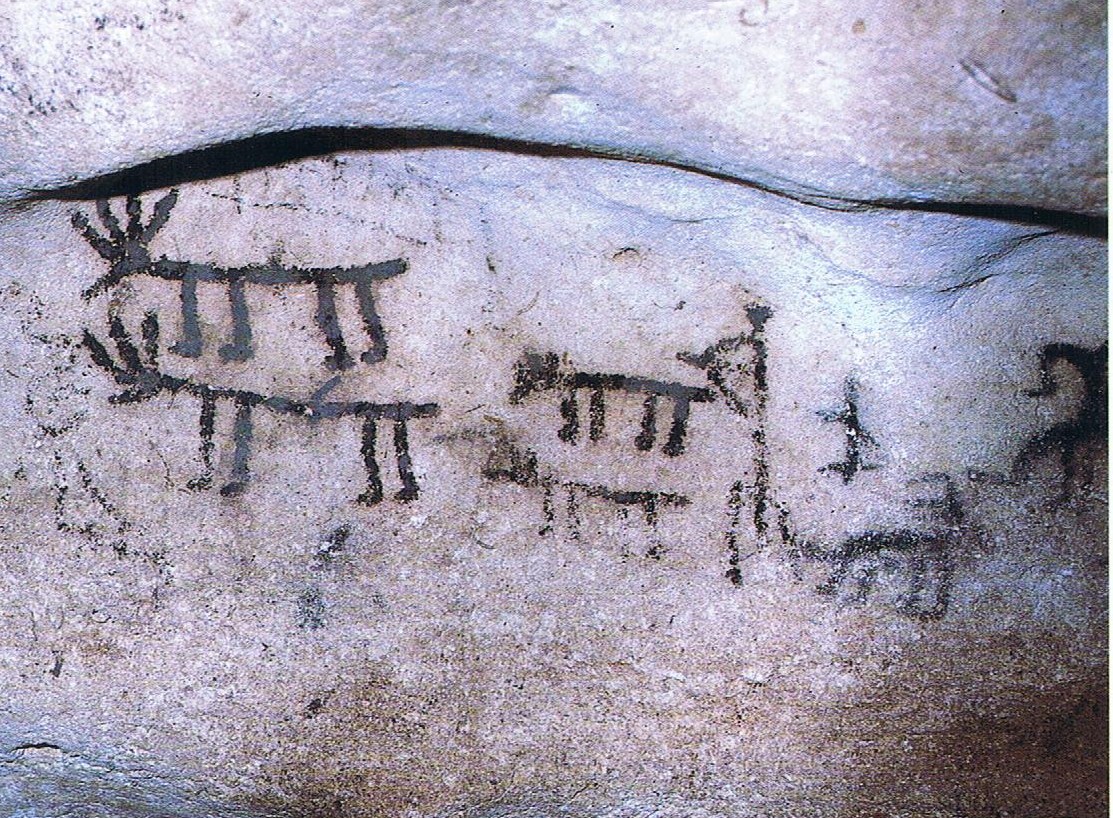
Pictograms depicting deer-hunting scenes, which give the cave its name, although at first it was called the Cave of Aeneas, after the legend that Aeneas landed right here at Porto Badisco.
PORTO BADISCO · OTRANTO
A HERITAGE TO PROTECT
On the coast of Porto Badisco opens a karst cavity that safeguards one of the most extraordinary complexes of prehistoric art in the Mediterranean: the Grotta dei Cervi, or Deer Cave.
The cave was discovered on 1 February 1970 by 5 members of the Maglie speleological group (“Pasquale De Lorentis”): Mattioli, Albertini, Mazzotta, Evangelisti and Rizzo. Exploring a shaft in the rock near the sea, they found walls covered in prehistoric paintings in an excellent state of preservation.
Porto Badisco, with its famous caves, is home to the most important complex of post-Palaeolithic cave painting in Europe. Professor Paolo Graziosi of the Italian Institute of Prehistory and Protohistory in Florence called the cave the “Sistine Chapel” of prehistory: a treasure of inestimable natural value, shaped by karst processes, and a strong draw for tourists from all over the world.
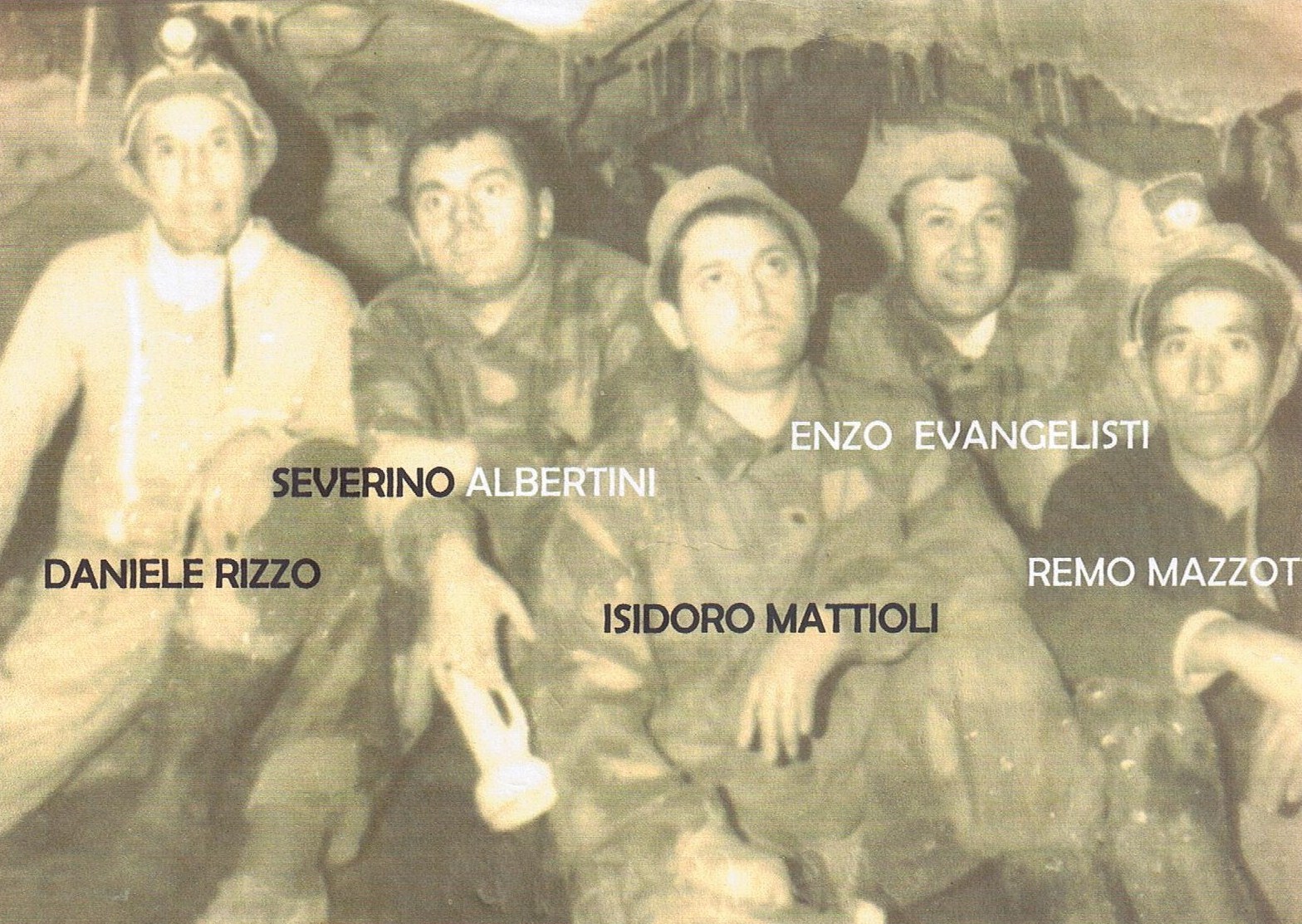
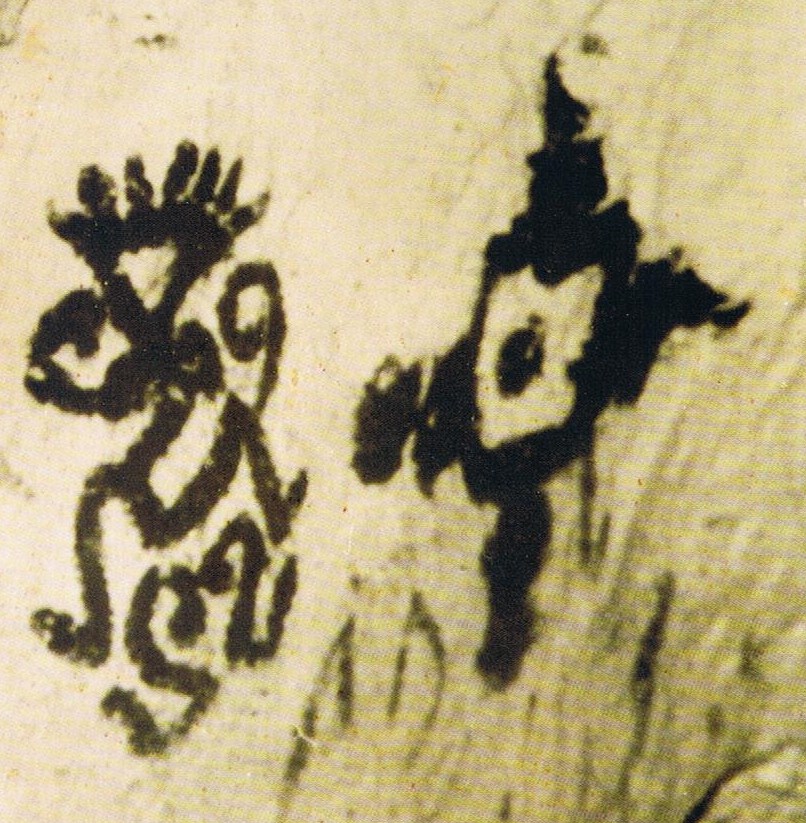
The art of Porto Badisco seems to belong to the heart of the Neolithic and comprises two groups of pictograms: figurative and non-figurative. The pictograms made with bat guano are more recent, while those in red ochre are older. The cave seems to have had a strong ritual and sacred value.
Pictograms depicting deer-hunting scenes, which give the cave its name, although at first it was called the Cave of Aeneas, after the legend that Aeneas landed right here at Porto Badisco.
Beside the hunting scenes is the figure of the Shaman, a dancing sorcerer, around a cross-shaped sign. It is the symbol of the Pro Loco.
Abstract geometric shapes and magical symbols that are not easy to interpret.
The cave is made up of 3 corridors shaped by karst processes and rich in stalactites and stalagmites. The first corridor opens on the west side, then splits into two galleries that rejoin into a single corridor where groups of figures and pottery remains were found; the pottery is kept at the Superintendency of Taranto. The second corridor, rich in painted testimonies, is marked by a narrow tunnel running parallel to the 3rd corridor and accessible only on hands and knees. A special feature of the cave is the figures representing children’s hands, which bear witness to their presence in this cave.
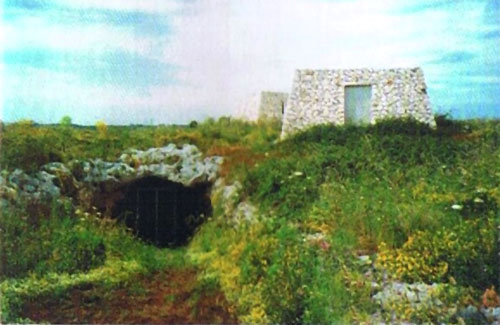
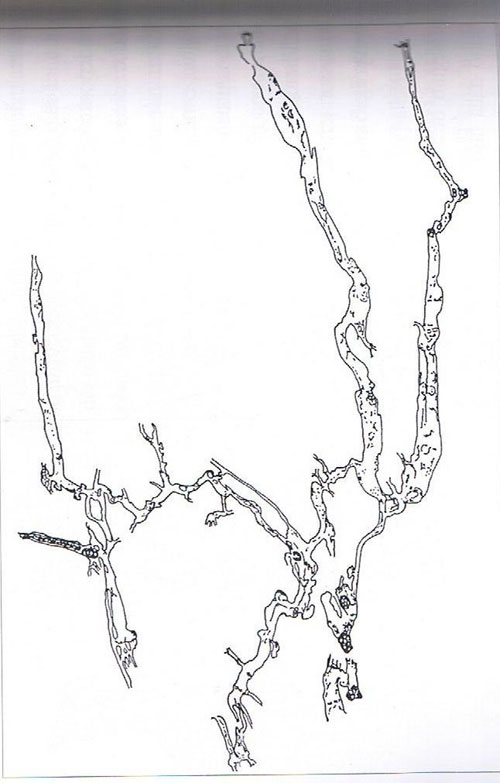
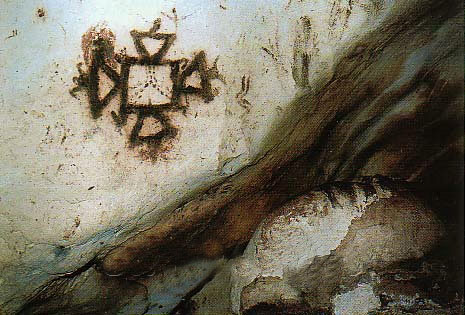

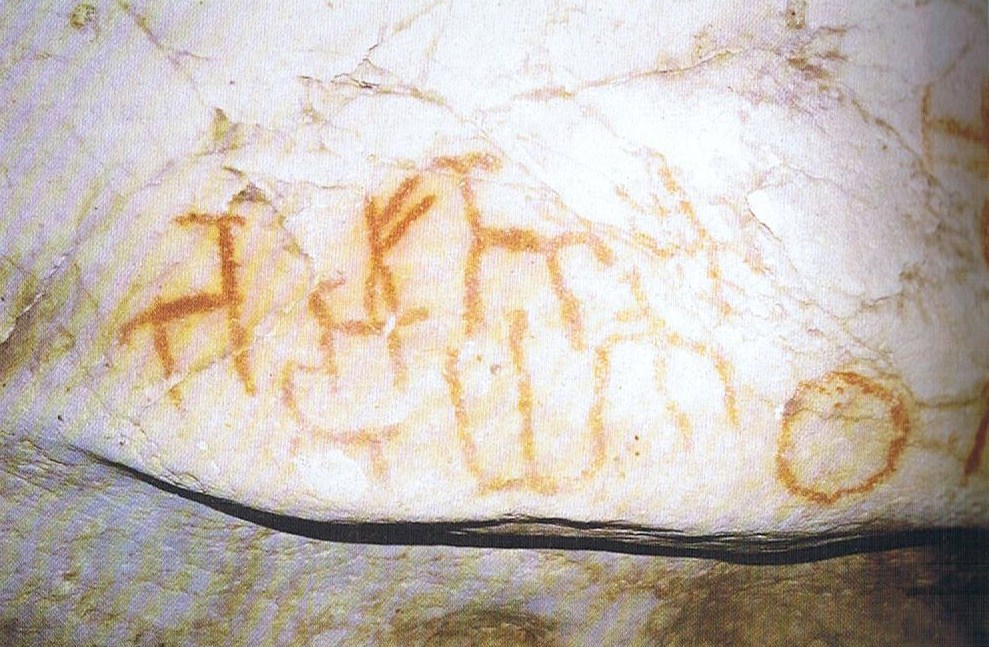
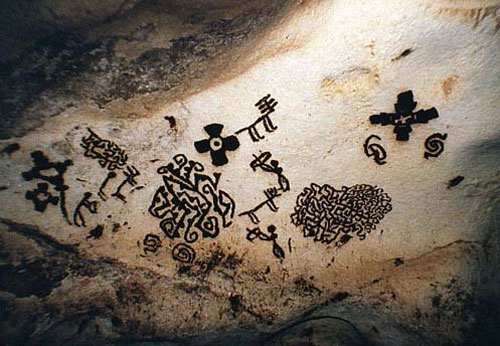
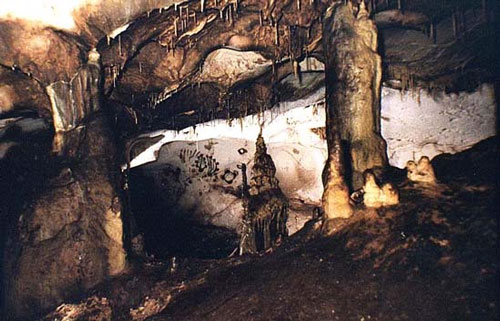
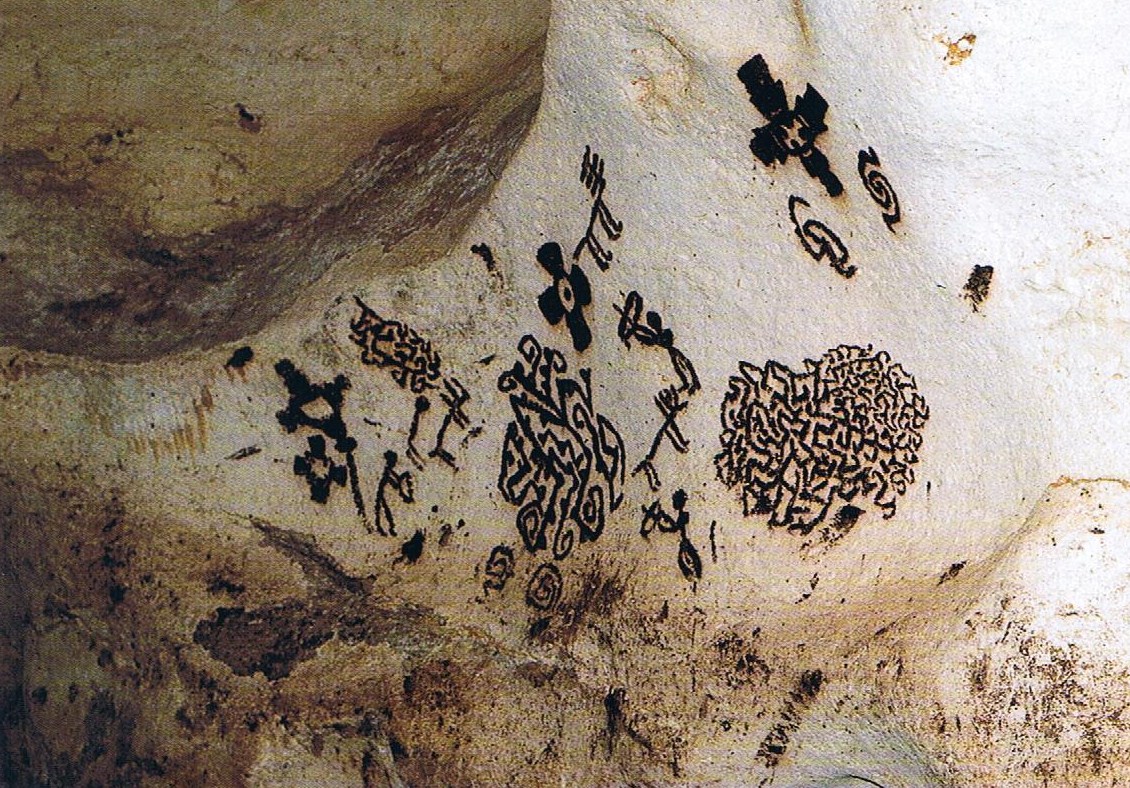
Published by permission of the Ministry of Cultural Heritage and Activities – Regional Directorate for Cultural and Landscape Heritage of Puglia – Superintendency for Archaeological Heritage of Puglia. Reproduction is prohibited.
The cave lies just a few metres from the damp little beach of Badisco; from outside it can be recognised by a low opening almost at sea level. Prof. Emilio Stasi, in his book “La Grotta Funeraria a Badisco”, tells us that in the past this tunnel was inhabited by poor devils, that is, by poor people. Fishermen also took shelter in this cave and paid homage to the inhabitants of the tunnel by donating their catch.
Inside the cave, Neolithic tools were found: stone artefacts such as instruments, waste and working residue, as well as the remains of human skeletons, which is why it is called funerary. These finds date back to the Neolithic (about 7,000 years ago).
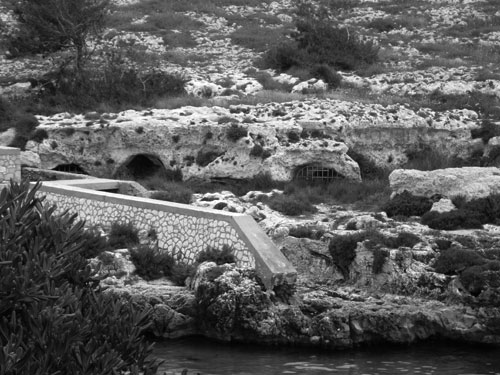
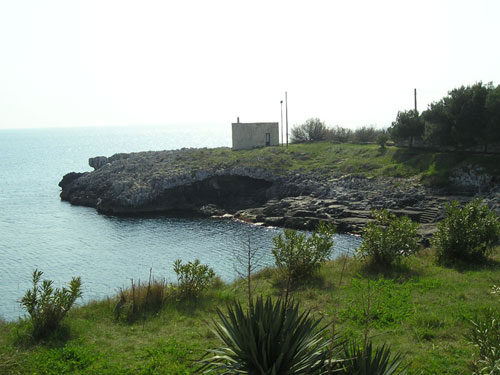
Badisco, “where toward the East there is a curved bay”, represents, according to Virgil’s description, the landing place of Aeneas after his flight from Troy; for this reason the cave was nicknamed the Cave of Aeneas. It lies in the area called “le Tagliate”, so named because of its jagged, almost inaccessible rock, from which smooth platforms were later carved: hence the name “Tagliate” (“cuts”). The cave was later used by the Basilian monks, who held fishing rights here and kept salt pans, hence the name Salinaci Cave.
To protect such a fragile environment, the cave is not freely accessible: entry is only allowed on guided, limited-size visits organised in coordination with the bodies responsible for its protection.
Dates, times, group sizes and booking arrangements change over time: for information see Guided Tours or contact the Pro Loco (tel. 0836/811640 · 339/4245222). Insert the official booking details
ISPRA page on the Grotta dei Cervi (in Italian) ↗Porto Badisco lies on the coast south of Otranto (province of Lecce), about 10 minutes by car from the old town. The nearest car park to the village and the bay is signposted on site; in summer it is best to arrive early in the morning.